Diggsville Community, Roberts Field Highway, Lower Margibi County
|
Mon – Sat : 9:00 AM – 6:00 PM
|
info@faithuniversitycollege.net
Undergraduate
Building upon the Associate foundation, the Bachelor’s programs at Faith University College provide an advanced, ethics-centered curriculum that empowers students with the specialized expertise and leadership skills necessary for professional mastery and impactful service.
Featured Courses
Computer Science & Information Technology (B.Sc.)

Curriculum Highlights
Core Technical Tracks: Introduction to Computer Science, Digital Media, Fundamental of Computer Networking, Operating Systems, and Fundamental of Database.
Advanced Computing: Data Analysis & Visualization, Computational Mathematics, Software Engineering, and Microprocessors.
Emerging Technologies: Artificial Intelligence, Cloud Computing & Technology, Data Science & Machine Learning, and Introduction to Cybersecurity.
Professional Readiness: Microsoft Windows & Server Administration, Mobile Application Development, Advanced Cybersecurity, and Research Methods.
Program Overview
The Department of Computer Science & Information Technology at Faith University College focuses on providing students with a strong theoretical and quantitative foundation in computing, with an emphasis on building scalable, secure software and managing reliable information systems. The curriculum covers a broad range of critical focus areas, including algorithms and programming, databases, cybersecurity, cloud computing, and data analytics/AI. Through hands-on, lab-intensive learning, internships, and senior capstone projects, graduates are prepared for high-impact careers as software developers, cybersecurity analysts, cloud engineers, and tech entrepreneurs.
Career Opportunities:
- Software, Web, or Mobile Developer
- Systems or Network Administrator
- Database or Cloud Engineer
- Cybersecurity Analyst
- Data Analyst or Data Engineer
- Tech Entrepreneur or Product/Business Analyst
- AI Specialist
Bachelor of Business & Social Sciences

Curriculum Highlights
HR Core: Introduction to Human Resources Management, Recruitment and Selection, Performance Management, and Organizational Behavior.
Legal & Ethical: Labor Law, Discipline and Employee Rights, and Management Integration Systems.
Business Essentials: Principles of Management, Entrepreneurship, and Procurement & Supply Chain Management.
- General Business (COBASS): Introduction to Accounting, Introduction to Micro Economics, Introduction to Macro Economics, Entrepreneurship, Principle of Management, Marketing, Business Finance, Business Law and Strategic Management.
Program Overview
Building on the Associate foundation, the Bachelor of Business and Social Sciences offers an advanced curriculum that focuses on strategic organizational leadership and the analysis of complex human dynamics through the mastery of Behavioral Economics, Data Analytics, and Global Governance. By integrating core disciplines like Digital Marketing and Human Resource Management with Public Policy and Sociology, the program equips principled graduates to drive ethical innovation and lead within the rapidly evolving global business and social landscape.
Career Opportunities:
- Government Ministries and Agencies
- County and Municipal Administrations
- Non-Governmental Organizations (NGOs) and International Development Agencies
- Public Service Commissions
- Policy Think Tanks and Civil Society Organizations
- Research and Academic Institutions
Electrical Engineering (B.Sc.)

Curriculum Highlights
Mathematical Foundations: Pre-Calculus, Calculus, Differential Equations, and MATLAB Programming.
Power & Energy Systems: Introduction to Renewable Energy, Photovoltaic (PV) Technology, Power Systems Analysis, and Energy Conversion & Storage.
Electronics & Automation: Digital Electronics I & II, Control Systems, Automation Engineering, and Electronic Devices.
Communications: Telecommunications, Wireless Communication, and Signal Processing.
Program Overview
The Electrical Engineering program is designed to deliver a rigorous education in engineering fundamentals, blending advanced mathematical foundations with practical, hands-on laboratory experiences. Students explore specialized fields such as power systems analysis, digital electronics, telecommunications, and renewable energy technologies like solar PV. By integrating industrial training and engineering project management, the program prepares principled graduates to innovate within the global energy and technology sectors as power systems engineers, telecommunications specialists, or electronics designers.
Career Opportunities:
- Power Systems or Substation Engineer
- Electrical Maintenance or Plant Engineer
- Electronics or Embedded Systems Engineer
- Control and Instrumentation Engineer
- Telecommunications Engineer
- Renewable Energy or Solar PV Engineer
- Quality Assurance, Testing Engineer, or Technical Sales
Bachelor of Education (B.Ed)

Curriculum Highlights
Pedagogical Core: Foundation Psychology of Education, Instructional Media, Planning and Evaluation, and Instructional Methods.
Leadership (Administration): Introduction to School Administration, Principalship, Classroom Management, and School Law and Policy.
Subject Specialties: Specialized tracks in Mathematics (General Mathematics, Educational Statistics) and Integrated Science (General Biology, Basic Chemistry).
Program Overview
The College of Education and Religious Studies (CERS) is a center for educator preparation dedicated to producing practice-ready graduates who contribute to the national improvement of education. Through degree pathways in Education Administration, Integrated Science Education, and Mathematics Education, the program fosters strong school partnerships and prepares students for roles such as school administrative officers, curriculum developers, and instructional coaches. Students are equipped with foundational skills in educational psychology and classroom management, ensuring they lead with integrity in both academic and professional settings.
Career Opportunities:
- School Administrative Officer
- Education Program Officer
- Instructional Coach
- Science Educator (Secondary level)
- Laboratory Coordinator
- Science Curriculum Developer
- Mathematics Educator
- Assessment Officer
- Banking/Operations Analyst.
Public Health (B.Sc.)

Curriculum Highlights
Foundational Science: Human Anatomy & Physiology, General Biology, and Basic Chemistry.
Public Health Core: Introduction to Public Health, Environmental Health Science, Social Behavior Science, and Waste Management.
Field Work: Health Seminars, Disease Surveillance, and Epidemiology.
Program Overview
The Public Health program, part of the College of Allied Health Sciences, focuses on protecting and improving community health by blending classroom learning with field practicums and laboratory practice. Students are trained to prevent disease, conduct disease surveillance, and support evidence-based decisions to strengthen Liberia’s broader health system. Graduates are prepared for diverse careers such as health promotion officers, epidemiology assistants, and environmental health inspectors, with a strong emphasis on professional ethics and community engagement.
Career Opportunities:
- Health Promotion or Behavior Change Officer
- Community Health or Program Officer (MOH, NGOs, INGOs)
- Disease Surveillance or Epidemiology Assistant/Officer
- Monitoring & Evaluation (M&E) or Data Officer
- Health Policy/Planning Assistant or Health Systems Analyst
- Environmental or Public Health Inspector
Medical Laboratory Science (B.Sc.)
Curriculum Highlights
Lab Foundations: Fundamentals of Medical Lab Tech I & II, Medical Microbiology, and Medical Parasitology.
Clinical Specialties: Hematology, Urinalysis, Immunology, and Histology/Cytology.
Management: Laboratory Management and Professional Ethics.
Program Overview
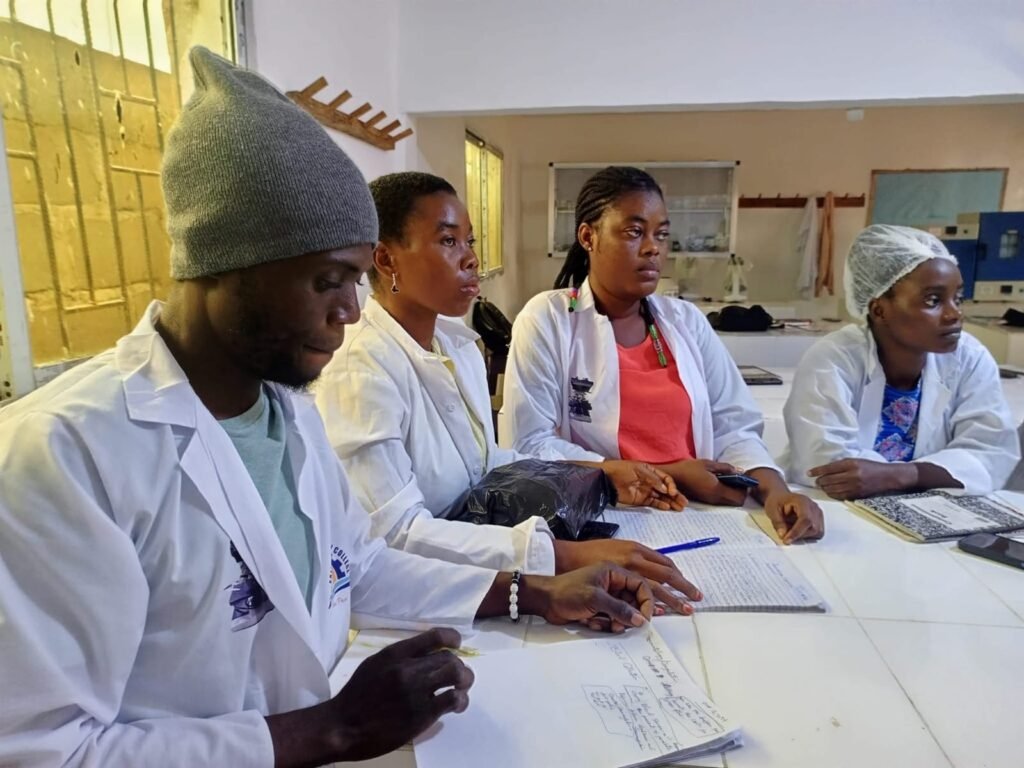
Referred to as Medical Laboratory Technology at Faith University College, this program develops skilled technologists capable of providing critical diagnostic support in hospital, clinical, and research laboratories. The curriculum emphasizes mastery in laboratory competencies across disciplines like hematology, microbiology, and clinical chemistry, while prioritizing safety and quality assurance. Students must complete rigorous clinical rotations and demonstrate professional conduct to ensure they are ready to contribute to accurate disease detection and medical diagnostics upon graduation.
Career Opportunities:
- Medical Laboratory Technologist or Scientist (Hospital, Clinic, Public Health Lab)
- Bench Technologist (Hematology, Microbiology, Clinical Chemistry, etc.)
- Research/Lab Technologist (Universities or Diagnostics firms)
- Quality Assurance/Quality Control (QA/QC) Officer
- Laboratory Supervisor, Manager, or Diagnostics Sales Specialist
Public Administration (BPA)

Curriculum Highlights
Governance & Theory: Introduction to Public Administration, Administrative Theory & Practices, and Politics & Administrative Relations.
Management & Policy: Public Policy Analysis, Public Personnel Administration, Leadership Theory & Practices, and Local Government Administration.
Finance & Operations: Public Finance, Government Budgetary Processes, Procurement and Supply Chain Management, and Public Financial Management.
Program Overview
The Department of Public Administration is dedicated to training competent, ethical, and innovative leaders for roles in government, private, and nonprofit sectors. The Bachelor of Public Administration degree provides a comprehensive foundation in governance, public policy, public financial management, and organizational behavior. By integrating theoretical research with hands-on practice and mandatory internships, the program prepares graduates to drive societal transformation and manage complex public sector challenges with excellence and innovation.
Career Opportunities:
- Government Ministries and Agencies
- County and Municipal Administrations
- Non-Governmental Organizations (NGOs) and International Development Agencies
- Public Service Commissions
- Policy Think Tanks and Civil Society Organizations
- Research and Academic Institutions
Criminal Justice (B.A.)

Curriculum Highlights
Foundations: Introduction to Criminology, Gender & Criminal Justice, and Introduction to Social Organization.
Justice Systems: Corrections, Contemporary Criminal Justice Systems, and Police Administration.
Specialized Topics: Criminalists, Juvenile Delinquency, Victimology, and Private Security Administration.
Practical: Internship (6 credits) and Senior Research Paper.
Program Overview
Offered through the College of Liberal Arts, the Criminal Justice program prepares graduates to uphold the rule of law and maintain public safety by integrating justice sector theory with data literacy and professional standards. The Bachelor of Arts curriculum covers a broad range of essential topics, including law enforcement, criminology, victimology, and police administration. Students gain practical skills through field internships and senior research, qualifying them for impactful careers in police and immigration services, court administration, and corporate security management.
Career Opportunities:
- Police, Immigration, and Corrections Services
- Court Administration and Judicial Support
- Probation, Parole, and Rehabilitation Services
- Security and Risk Management (Corporate, NGO, Community)
- Compliance, Anti-corruption, and Internal Investigations
- Border Management and Customs Enforcement
- Community Safety, Mediation, and Conflict Resolution